
Last updated September 10, 2026
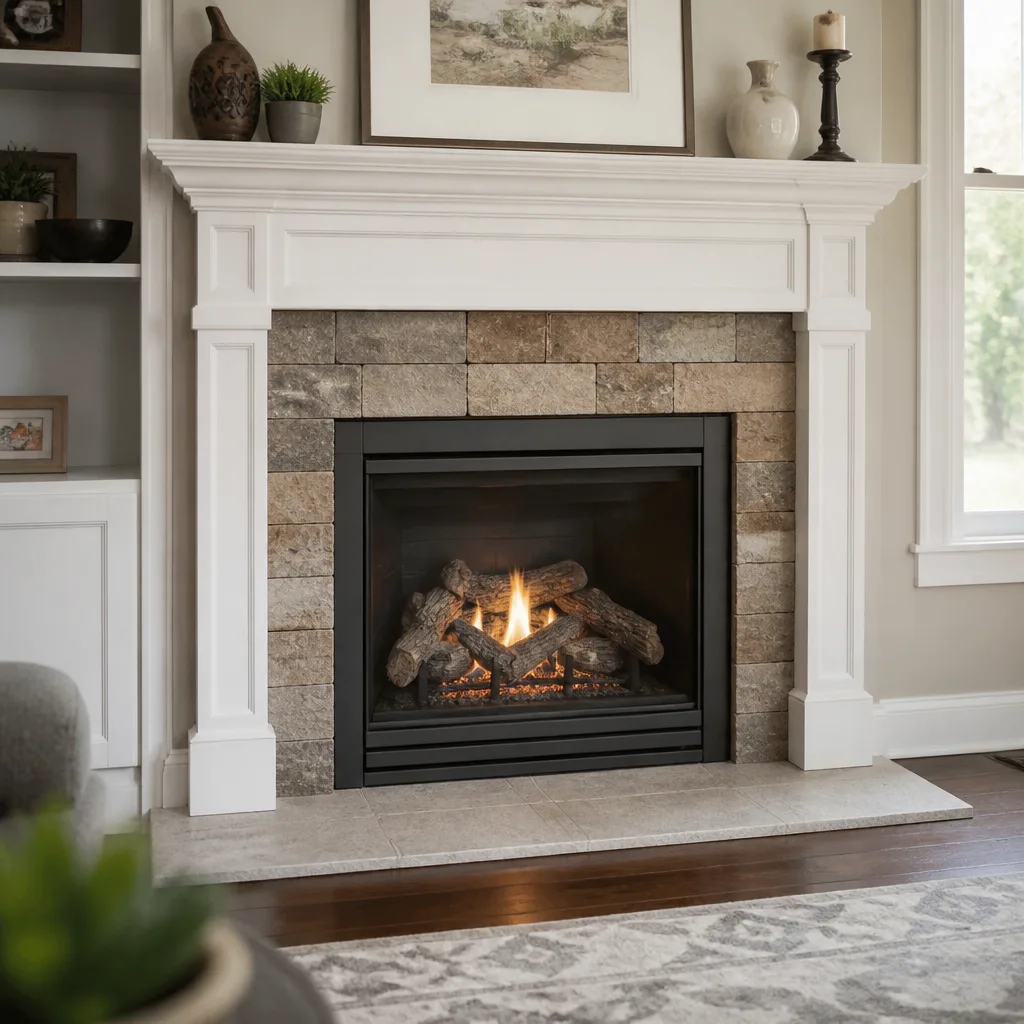
Level 1 sweep and inspection to the NFPA 211 annual standard - flue, crown, cap, and flashing checked and photographed
Chimney sweep logs do not sweep chimneys. They loosen some creosote - which then falls where a brush and vacuum still have to collect it.
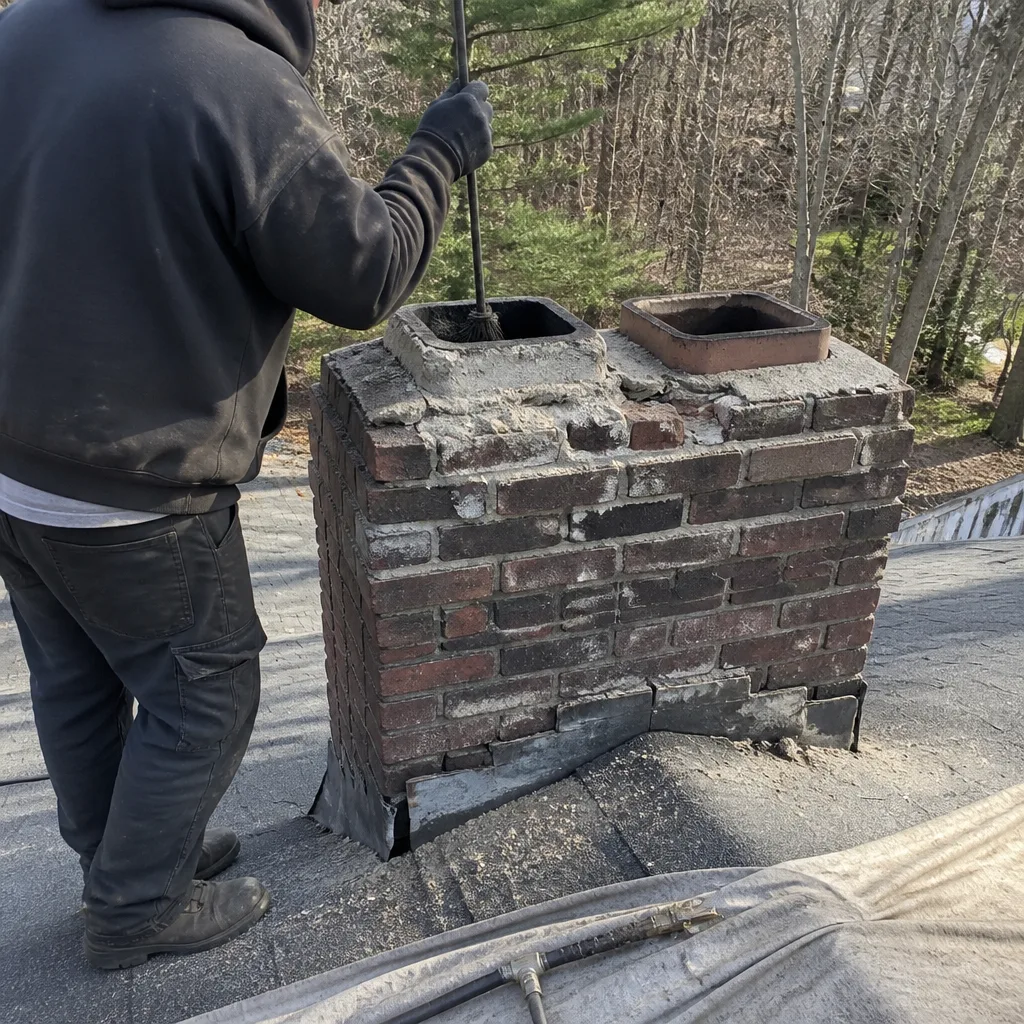 Before
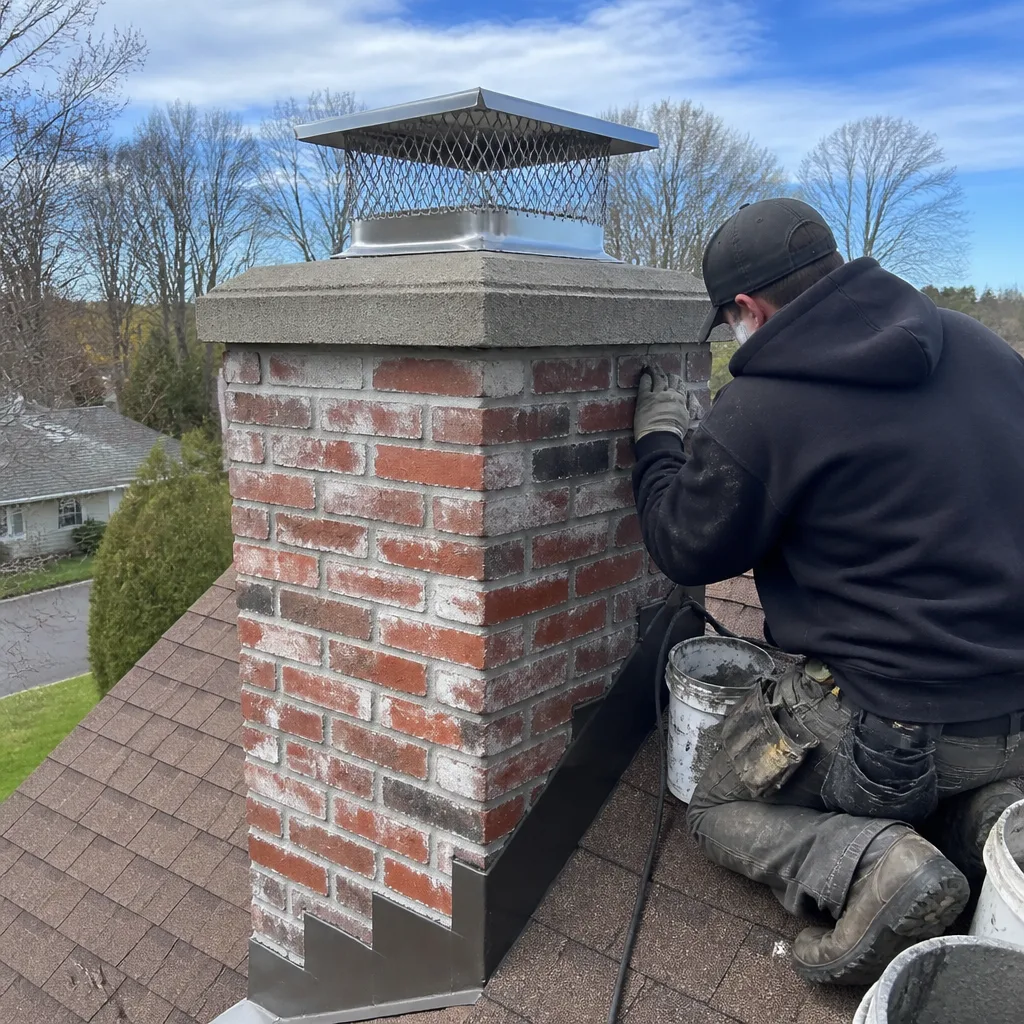 After
After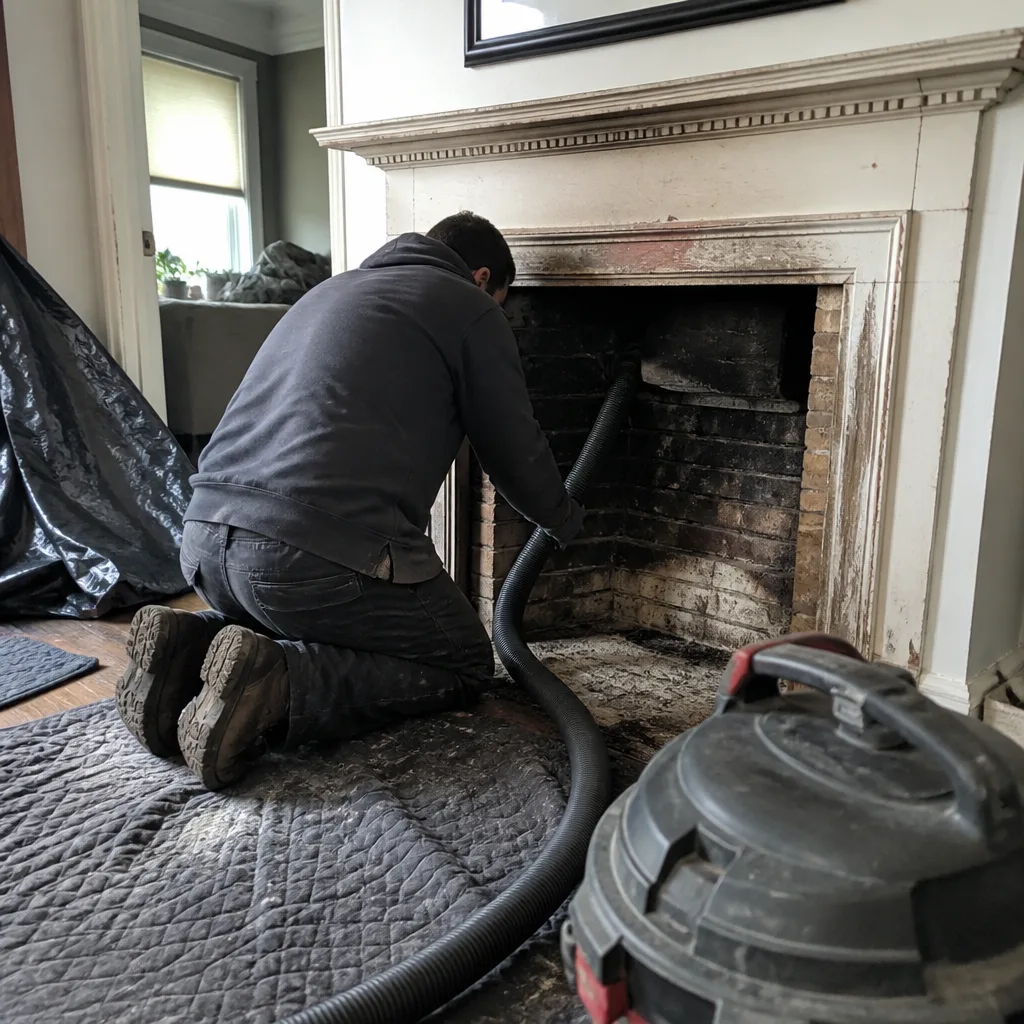 Before
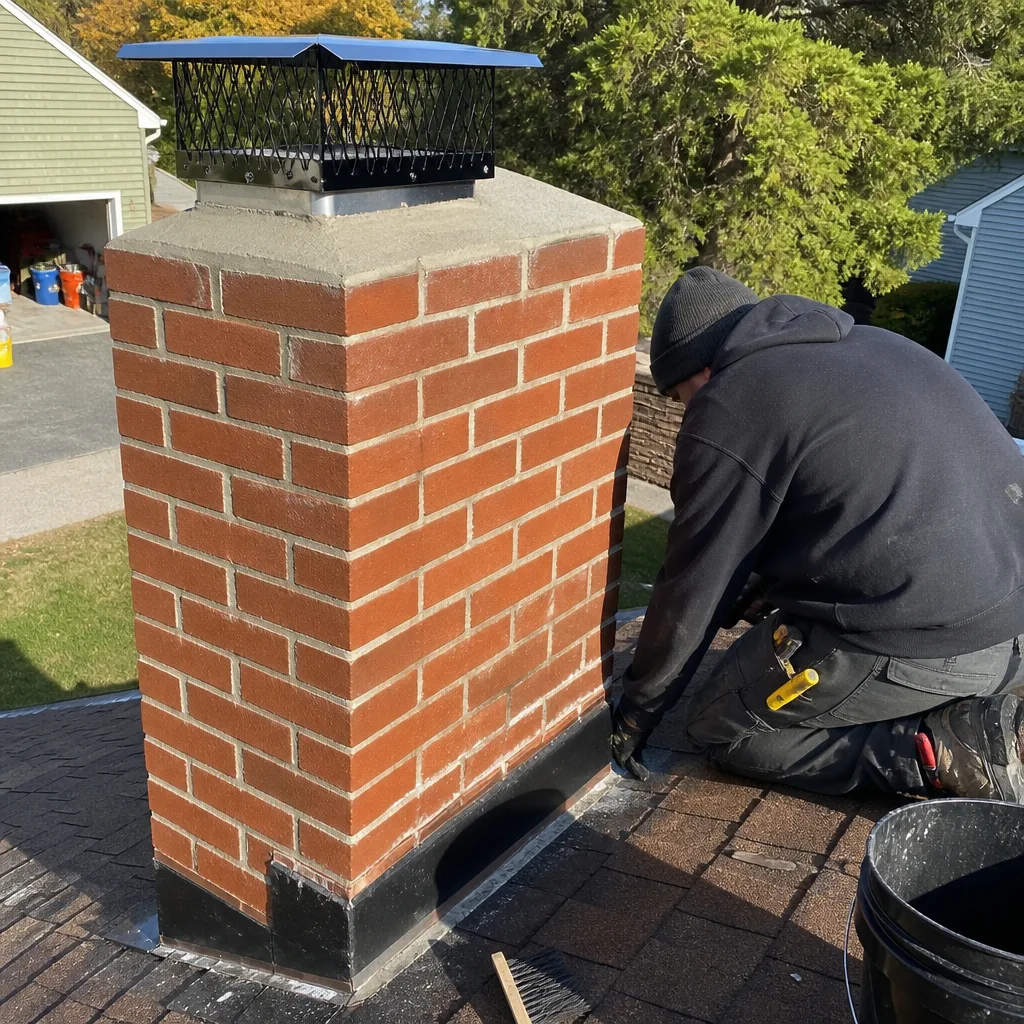 After
After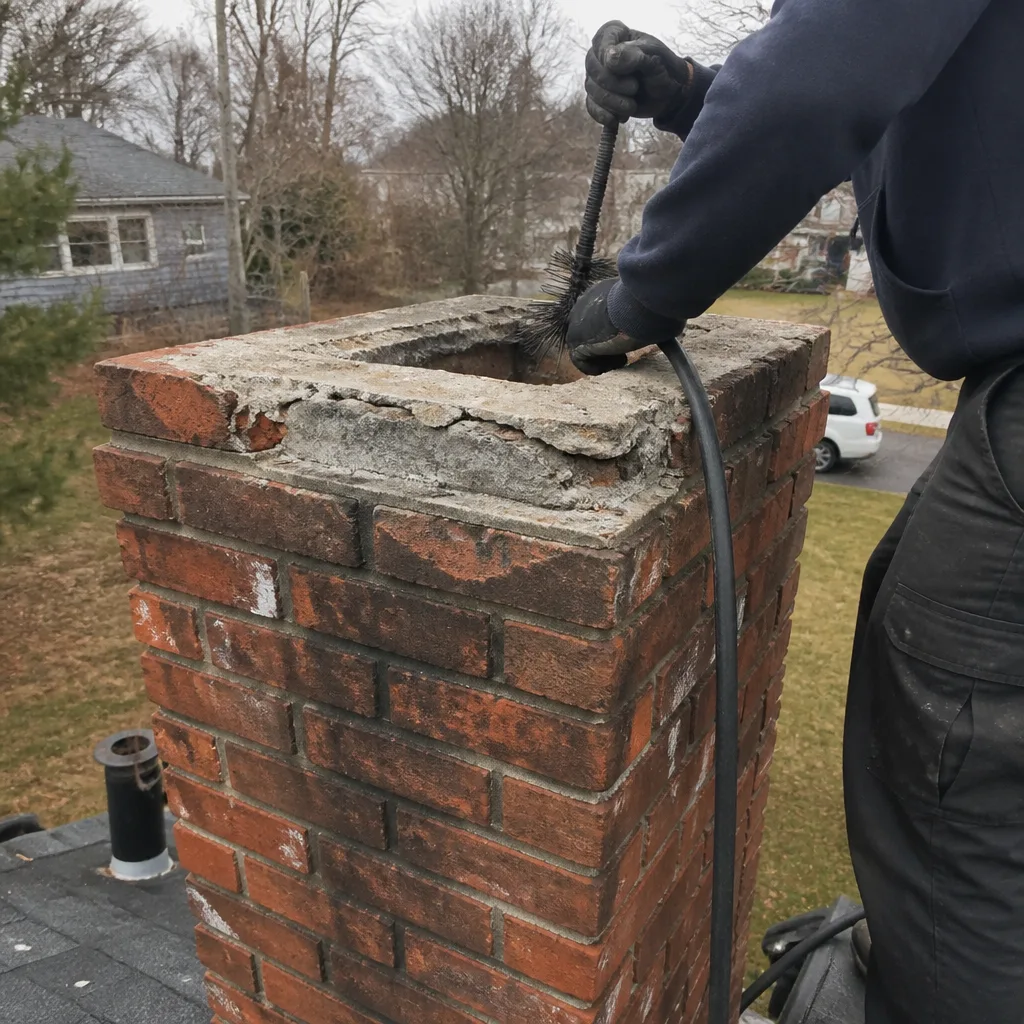 Before
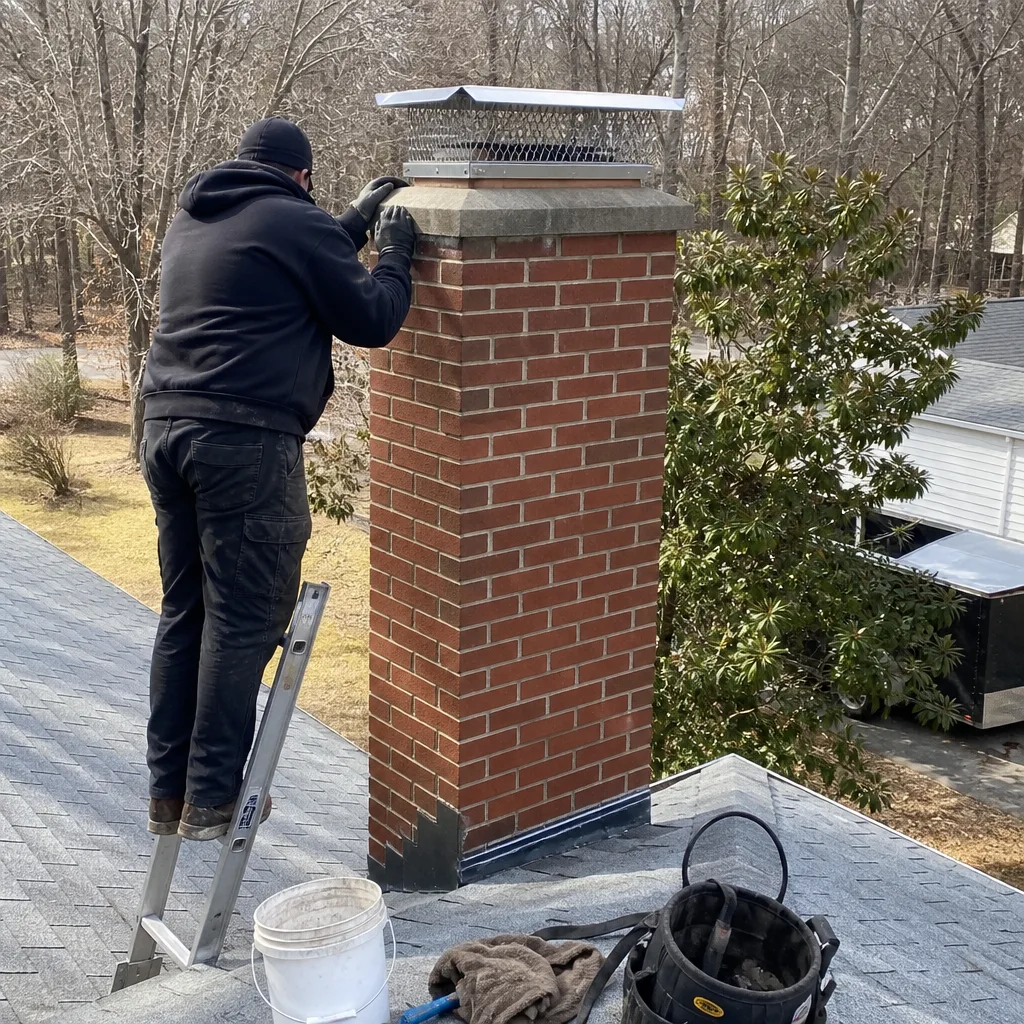 After
AfterSeasonal Chimney Cleaning Care for Taunton: Year-Round Homeowner’s Guide
The most expensive chimney repairs in southeastern Massachusetts are almost always traced back to a problem that was visible in April and ignored until November. By then, a $300 tuckpointing job in Taunton has become a $2,800 crown rebuild. We’ve seen it for over 42 years. This guide maps each threat to its calendar window so you act before the damage compounds, not after your first fire of the season goes wrong.
Quick Answer
Year-round chimney care in Taunton means four distinct seasonal actions: spring inspection for freeze-thaw damage, summer cap and flashing evaluation before heavy rains, fall sweeping and Level-2 inspection before the burning season, and winter monitoring of draft and odor signals during use. Homeowners who follow this rhythm typically spend 60% less on repairs over a decade than those who wait for visible problems.
Table of Contents
- Spring: Assessing Freeze-Thaw Damage Before Summer Moisture Hits
- Summer: Cap, Flashing, and Animal Intrusion - The Hidden Warm-Weather Threats
- Fall: The Pre-Season Steps That Determine October Safety
- Winter: Reading Your Chimney’s Real-Time Signals During Burning Season
- Building a Seasonal Rhythm That Lowers Costs Every Year
- Common Mistakes to Avoid
- When to Call a Professional
- Frequently Asked Questions
Spring: Assessing Freeze-Thaw Damage Before Summer Moisture Hits
Taunton’s winter pattern is brutal on masonry in ways that aren’t obvious from the ground. From January through March, we typically see 40 to 60 freeze-thaw cycles. Water enters hairline cracks in the mortar, expands when it freezes, and widens those cracks by thousandths of an inch each time. By late March, a joint that looked sound in December has become a pathway for summer rain.
Here’s what happens if you wait. April and May in Bristol County bring steady, soaking rains - not the downpours that run off quickly, but the persistent drizzle that finds every opening. Water that penetrated during freeze-thaw now has unrestricted access to the interior masonry. By June, we’ve already booked jobs in neighborhoods like Weir Village and Whittenton where homeowners noticed a water stain on the ceiling near the fireplace - the first visible sign that the crown or mortar joints failed months earlier.
The spring inspection has a narrow purpose: find what winter broke before summer exploits it. Our technicians look for three specific conditions that originate in freeze-thaw damage:
- Spalling brick faces - the surface flakes off in thin sheets, exposing porous interior masonry to accelerated deterioration. In Taunton’s older housing stock, particularly the pre-1940s homes near downtown, we see this most often on south-facing chimney exposures where daytime sun melts frost, then overnight refreezing attacks the saturated brick.
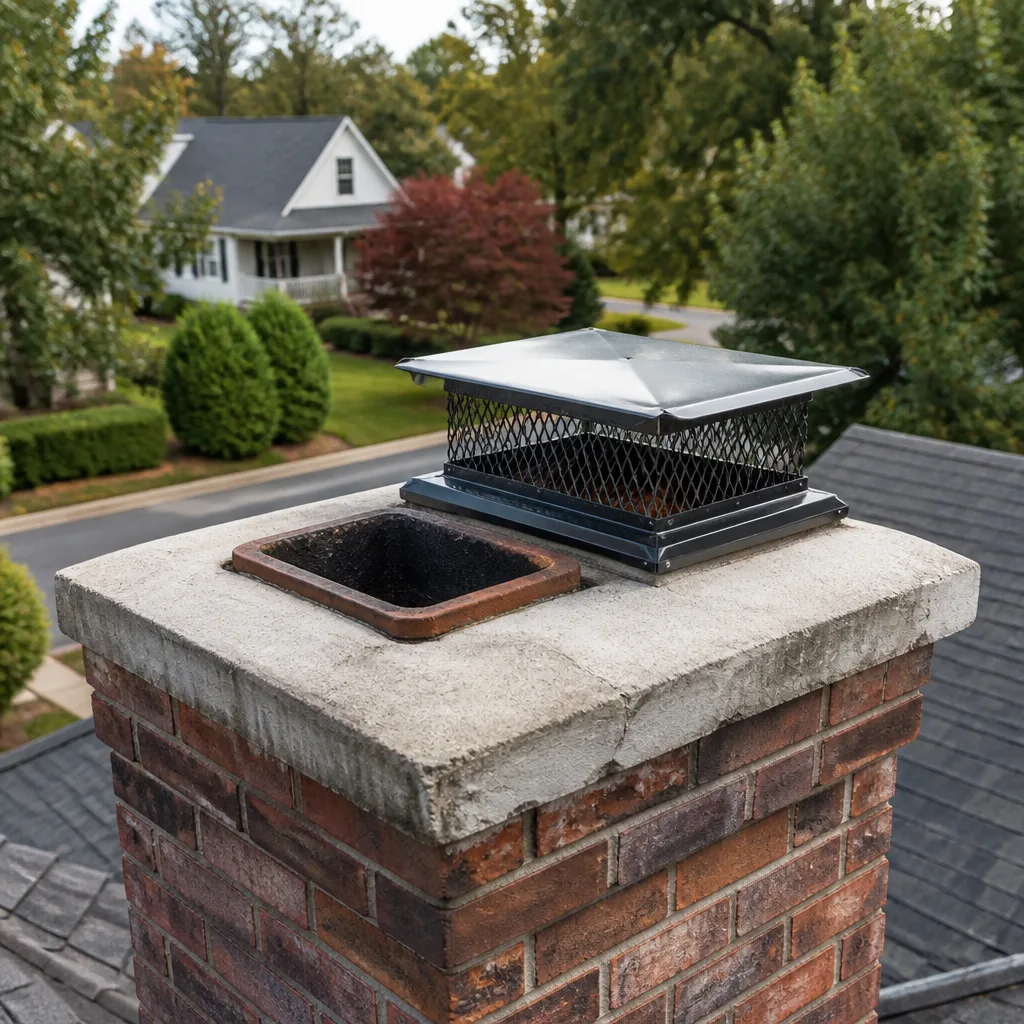
- Deteriorated mortar joints - not missing mortar, but mortar that has become powdery or developed internal voids. These joints look intact until probed. We document them with photos during our chimney cleaning and sweep in Taunton so homeowners see the difference between surface appearance and actual condition.
- Crown cracks with thermal expansion patterns - cracks that run parallel to the flue opening, indicating the concrete crown has separated from the flue tile due to differential expansion. These widen dramatically once summer humidity cycles begin.
The repair window in spring is practical, not just theoretical. Masonry work needs temperatures consistently above 40 degrees for proper curing. Late April through early June in Taunton provides that reliably. Crown repairs using professional-grade materials from HeatShield or Copperfield cure correctly in this window. Wait until September, and you’re competing with every other homeowner who waited - and possibly facing weather that delays curing.
One more factor specific to this area: Taunton’s water table and clay soils create foundation movement that stresses chimney structures differently than in rocky northern New England. We’ve documented more vertical cracking in chimney crowns here than in our work in the granite regions of Worcester County. Spring is when those movement-related cracks are most visible, before summer vegetation growth obscures the base.
Summer: Cap, Flashing, and Animal Intrusion - The Hidden Warm-Weather Threats
Summer is when chimneys are forgotten, and that’s precisely why it’s the most important season for prevention. A chimney that sits unused from May through August accumulates three vulnerabilities that become emergencies in October: cap failure, flashing separation, and animal occupation.
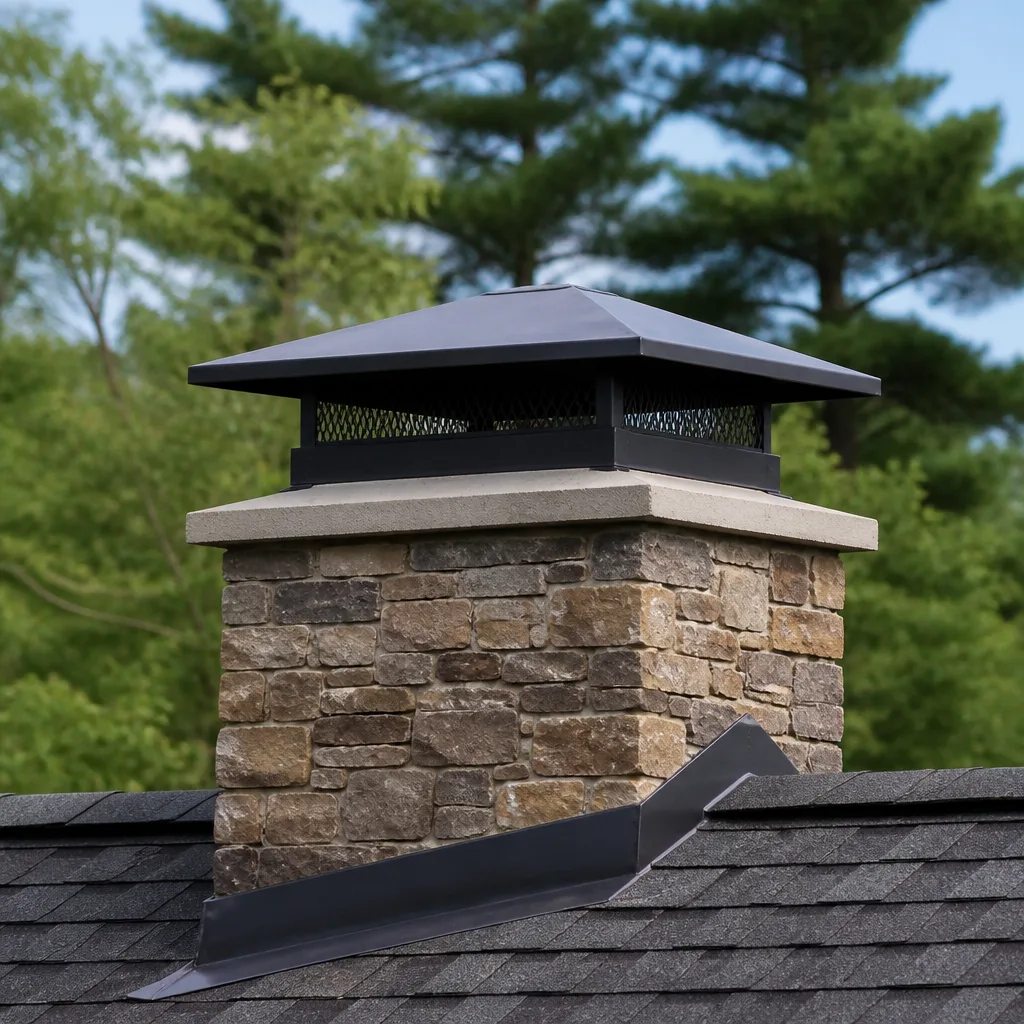
Cap condition determines whether water enters the flue during summer storms. In Taunton, July and August bring localized heavy precipitation - the kind that overwhelms gutters and finds any opening. A cap with a rusted screen, separated seams, or missing fasteners allows water directly into the flue. That water mixes with residual soot to form acidic compounds that attack clay flue tiles and stainless steel liners alike. By fall, the homeowner lights the first fire and smells something acrid - that’s corrosion product, and it’s a warning that the flue interior has been deteriorating for months.
We install caps from Gelco and Olympia Chimney because their stainless construction withstands the salt-air influence that reaches Taunton from Buzzards Bay on prevailing southwest winds. Cheaper galvanized caps fail in three to five years here; we’ve removed plenty of them from homes near Lake Sabbatia where the combination of humidity and airborne salt accelerated corrosion.
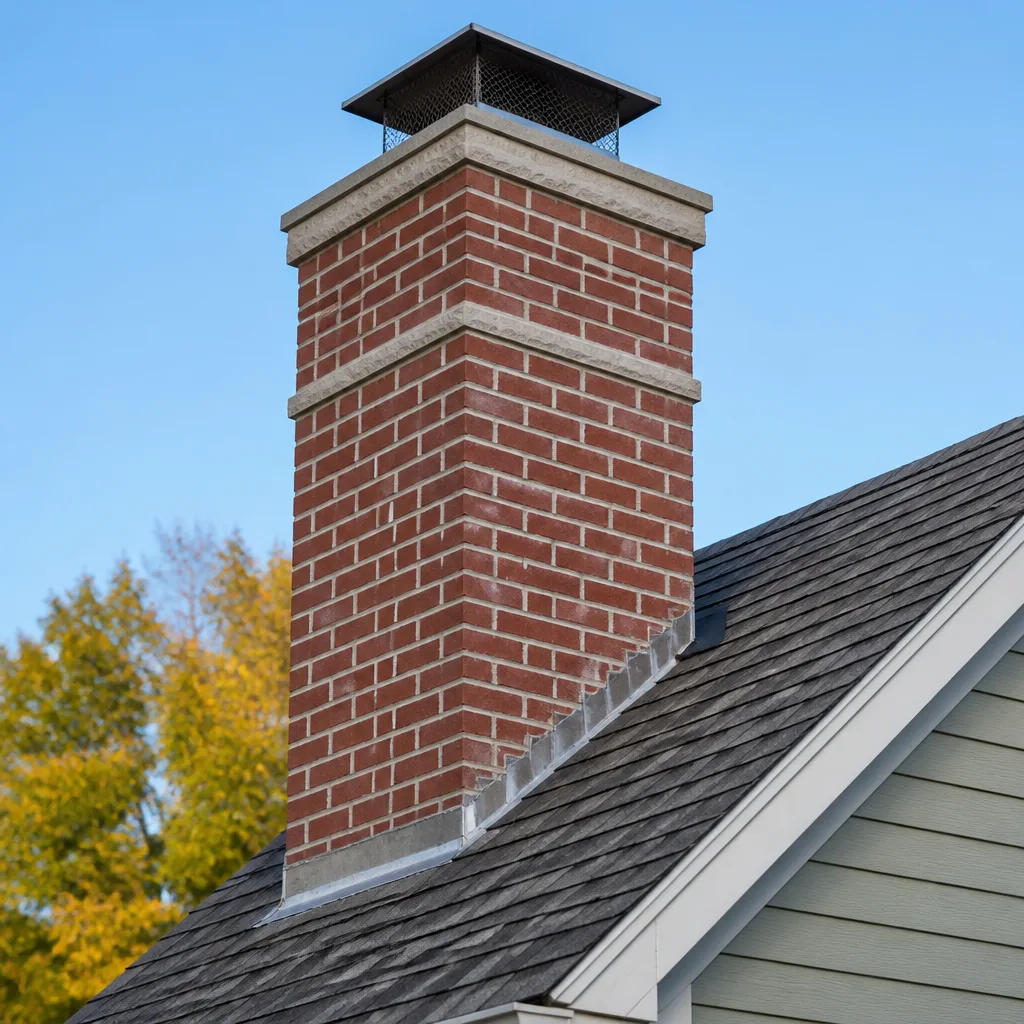
Flashing integrity is the second summer check. The metal seal where chimney meets roof expands and contracts through heating season cycles. By summer, any fatigue cracks are fully open. A quick hose test - running water at the chimney-roof junction for ten minutes while checking the attic - reveals leaks that would otherwise announce themselves as ceiling stains during the first November nor’easter.
Animal intrusion peaks in late summer. Raccoons, squirrels, and chimney swifts investigate uncapped or poorly capped flues in August and September. A squirrel nest packed eight feet down a flue doesn’t just block airflow - it creates a fire hazard and a carbon monoxide risk if the nest partially obstructs exhaust. We’ve extracted nests from Taunton chimneys where the homeowner had no idea anything was wrong until the fireplace services in Taunton technician ran the camera and found packed leaves, twigs, and unfortunately, deceased juveniles.
The summer inspection protocol we recommend:
- Visual cap inspection from ground and roof (or hire a professional with proper fall protection - we do not recommend homeowners climb roofs)
- Attic check for water staining at the chimney penetration
- Flue odor check on humid days - a musty or ammonia smell indicates moisture or animal presence
- Exterior mortar check while vegetation is low and access is clear
Address anything found in June or July. August is when chimney sweep schedules in southeastern Massachusetts begin filling for fall. The homeowners who book summer repairs get September dates for sweeping. Those who wait until they smell something in October are looking at November appointments - after they’ve already lit fires in a compromised system.
Fall: The Pre-Season Steps That Determine October Safety
Fall is when most Taunton homeowners think about their chimney, and that’s the problem. Everyone thinks about it at once. The difference between a safe first fire and a dangerous one often comes down to whether you scheduled in September or October.
Here’s the market reality: Hearthstone Chimney Co. and every reputable sweep in Bristol County has finite capacity before the burning season. The homeowners who call in early September get their choice of appointment times, thorough Level-2 camera inspections, and any needed repairs completed before the first cold snap. Those who wait until the first chilly morning in mid-October join a queue. We’ve seen October 15th callers get appointments in late November - after they’ve already been running their fireplace for weeks.
The pre-season protocol has a specific sequence, and skipping steps or reversing their order creates risk:
- Level-2 camera inspection first - before any sweeping, before any fire. The camera reveals creosote buildup patterns, flue tile condition, liner integrity, and obstruction. Sweeping before inspection destroys evidence. We document everything with photos the homeowner can see and provide a plain-English verdict on what needs attention, what can wait, and what’s in good shape.
- Professional sweeping if inspection permits - removing glazed creosote, soot, and debris. In Taunton’s older neighborhoods, particularly the Victorian-era homes near Church Green, we often find significant buildup from decades of use with inadequate maintenance. The chimney cleaning and sweep in Taunton process uses professional-grade equipment that doesn’t damage historic flue tiles.
- Repair scheduling before first fire - crown sealing, cap replacement, liner repair, or masonry work. The 90-Day Done Right Promise covers all of it: in writing, no arguing. If it’s not right, we make it right.
- Functional test with first fire - small, brief, monitored. Check for smoke spillage, unusual odor, or draft reversal.
There’s a specific Taunton climate factor in fall: the temperature inversion pattern that settles over the Taunton River valley on calm October mornings. Cold air pools in low areas, and chimneys in neighborhoods like Oakland and East Taunton can experience draft problems that don’t exist in summer testing. We advise homeowners in these areas to run their first fire on a breezy day, or to crack a window briefly to establish draft before the fire generates sufficient heat.
The cost of fall preparation versus fall emergency is stark. A scheduled September inspection and sweep runs $89 during our seasonal tune-up period. An October emergency call for smoke backing up into the living room - because a nest was missed, or creosote glazing caught fire, or a cracked flue tile diverted exhaust - starts at significantly more, and the repair can’t wait.
Winter: Reading Your Chimney’s Real-Time Signals During Burning Season
Once the burning season begins, most homeowners assume the maintenance window has closed. That’s not true. What you observe during normal use provides diagnostic information that prevents minor issues from becoming mid-winter emergencies.
There are three signals any homeowner can monitor without climbing, without tools, and without opening the flue:
Odor changes are the most immediate indicator. A clean, well-drafting chimney produces minimal smell in the living space. If you notice a sharp, acrid odor when the fireplace is not in use - particularly on mild, humid winter days - that’s creosote reacting with moisture. It means either the flue was not fully cleaned, or new glazing is forming faster than expected due to burning practices (green wood, restricted airflow, or smoldering fires). The smell is a warning that chimney fire conditions are developing.
Draft behavior tells you about obstruction or exterior damage. A fire that previously drew well and now spills smoke at startup, or requires the door to be cracked open to establish flow, indicates either a partial blockage (new nest, debris from cap failure) or structural damage that’s altered flue geometry (tile collapse, liner separation). In Taunton’s hilltop neighborhoods like Hammond Street area, sudden draft changes can also signal wind-related pressure pattern shifts - but rule out physical problems first.
Smoke characteristics during operation reveal combustion efficiency and creosote formation rate. Dense, dark smoke means incomplete combustion and rapid creosote deposition. Thin, light smoke with occasional visible flame in the firebox is correct. If you see smoke that lingers in the firebox or puffs back at door opening, that’s a draft problem requiring professional assessment.
Winter is not the season for DIY intervention on these signals. The flue contains hot surfaces, creosote deposits that can ignite with disturbance, and potentially compromised structural elements. What you can do: note the symptom, its frequency, and any correlation with weather conditions. Then call for a mid-season inspection if the pattern persists more than two fires.
One Taunton-specific winter note: homes in the floodplain areas near Mill River and Three Mile River sometimes experience foundation moisture issues that manifest as efflorescence on interior chimney breasts during heating season. The white powdery deposits aren’t dangerous themselves, but they indicate water movement through masonry that accelerates freeze-thaw damage. We document this during chimney repair in Taunton consultations and address the underlying moisture pathway.
The winter monitoring habit pays off most for homeowners who burn regularly - more than three times weekly. These systems accumulate creosote faster, and mid-season assessment can catch glazing before it becomes a chimney fire risk. We’ve performed February inspections in Taunton homes where the homeowner noticed odor changes in January, and found creosote buildup that would have ignited before March.
Building a Seasonal Rhythm That Lowers Costs Every Year
The homeowners who spend least on chimney maintenance over time share one trait: they calendarize inspection, not repair. They don’t wait for something to go wrong. They schedule the inspection, discover problems while they’re small, and address them in the appropriate season.
Here’s the rhythm we’ve observed working over four decades in southeastern Massachusetts:
| Month | Action | Typical Cost if Proactive | Typical Cost if Deferred |
|---|---|---|---|
| March-April | Post-winter exterior inspection for freeze-thaw damage | $0-$150 (inspection only) | $800-$2,800 (crown rebuild, interior water damage) |
| June-July | Cap, flashing, and animal intrusion assessment | $200-$400 (cap replacement) | $1,200-$3,500 (flue repair, liner damage, animal remediation) |
| September | Level-2 inspection and sweep | $89 (seasonal tune-up) | $400-$600 (emergency sweep), plus repair costs |
| October | First fire functional test; repair completion | $0 | Emergency call premium + possible property damage |
| January-February | Mid-season monitoring; call if signals change | $150 (inspection if needed) | $2,000-$8,000 (chimney fire damage, structural repair) |
The pattern is clear: each proactive step costs 15% to 25% of its deferred equivalent. But the savings aren’t just financial. The homeowner who follows this rhythm never has a cold night without heat because the chimney is unsafe, never has to explain soot damage to an insurance adjuster, and never wonders whether the fire they’re enjoying is actually venting properly.
For Taunton homeowners specifically, we recommend anchoring the calendar to local events: schedule spring inspection when you take down storm windows, summer cap check when you mow the lawn for the first time after July 4th, fall sweeping when school starts, and winter monitoring when you set clocks back. These anchors are more reliable than arbitrary dates, and they connect chimney care to routines you already maintain.
The 90-Day Done Right Promise supports this rhythm directly. If we inspect in September and find a condition that needs monitoring, we’ll recheck it within that window at no charge if you’re uncertain. No paperwork, no arguing. Krafted right, every time. Your home first. Standing behind it.
Common Mistakes to Avoid
- Waiting for visible damage. By the time you see a water stain on the ceiling or a brick face on the ground, the underlying problem has been active for one to three years. In Taunton’s climate, invisible deterioration moves fast.
- Sweeping without inspection. The brush removes evidence. We’ve been called after “budget sweeps” that glazed over cracked flue tiles, leaving the homeowner with a false sense of safety and a carbon monoxide risk they didn’t know existed.
- Assuming no fireplace use means no maintenance. Unused chimneys in Taunton suffer some of the worst damage from moisture intrusion and animal occupation, precisely because no one is monitoring them. The chimney repair in Taunton calls we dread most are from homeowners who “never used it” and are now facing $4,000 rebuilds because the structure deteriorated unchecked.
- Booking October appointments for “just a sweep.” In this market, October callers are competing with everyone else. The sweep that happens in September includes time for thorough inspection and same-visit minor repairs. The October sweep is rushed, and problems found often can’t be scheduled until November.
- Ignoring neighborhood-specific risk factors. Homes near Taunton’s historic industrial areas may have older, unlined chimneys adapted from coal to wood or gas. Homes in newer developments like Taunton Green may have builder-grade materials that fail faster than traditional masonry. One-size-fits-all maintenance misses these distinctions.
- DIY cap or crown sealing with hardware store products. These products aren’t rated for flue gas temperatures or freeze-thaw cycling. We’ve removed failed DIY sealants that trapped moisture against masonry, accelerating the damage they were meant to prevent. Professional-grade materials from Famco and Copperfield are specified for this environment.
- Failing to document. Without photos and written assessment, you have no baseline for comparing year to year. Our Level-2 inspections include dated photo documentation so you can see change over time - the difference between a crack that’s stable and one that’s propagating.
When to Call a Professional
Call when you observe any of the signals described in this guide: odor changes, draft problems, smoke spillage, visible exterior damage, or water intrusion. Call before the burning season if you have not had a Level-2 inspection within 12 months. Call immediately if you’ve had a chimney fire - even a small one - or if you notice pieces of flue tile in the firebox.
Do not attempt to inspect or repair the flue interior yourself. The combination of height, hot surfaces, creosote toxicity, and potential structural instability creates genuine hazard. Our technicians are background-checked, uniformed, and trained to assess these conditions safely.
Hearthstone Chimney Co. offers free estimates in Taunton. A live person answers every call, 24 hours a day, 7 days a week - not a voicemail, not a callback queue. Most jobs are completed in a single visit, with no-hassle upfront pricing: the number on the estimate is the number on the invoice. Call (774) 310-4281 to schedule.
Frequently Asked Questions
A professional chimney sweep in Taunton typically ranges from $150 to $350 for a standard cleaning, with Level-2 camera inspections running $200 to $400 depending on accessibility and system complexity. Hearthstone Chimney Co. offers an $89 Seasonal Tune-Up during early booking periods, which includes inspection and sweep. Call (774) 310-4281 for current pricing and availability - estimates are free.
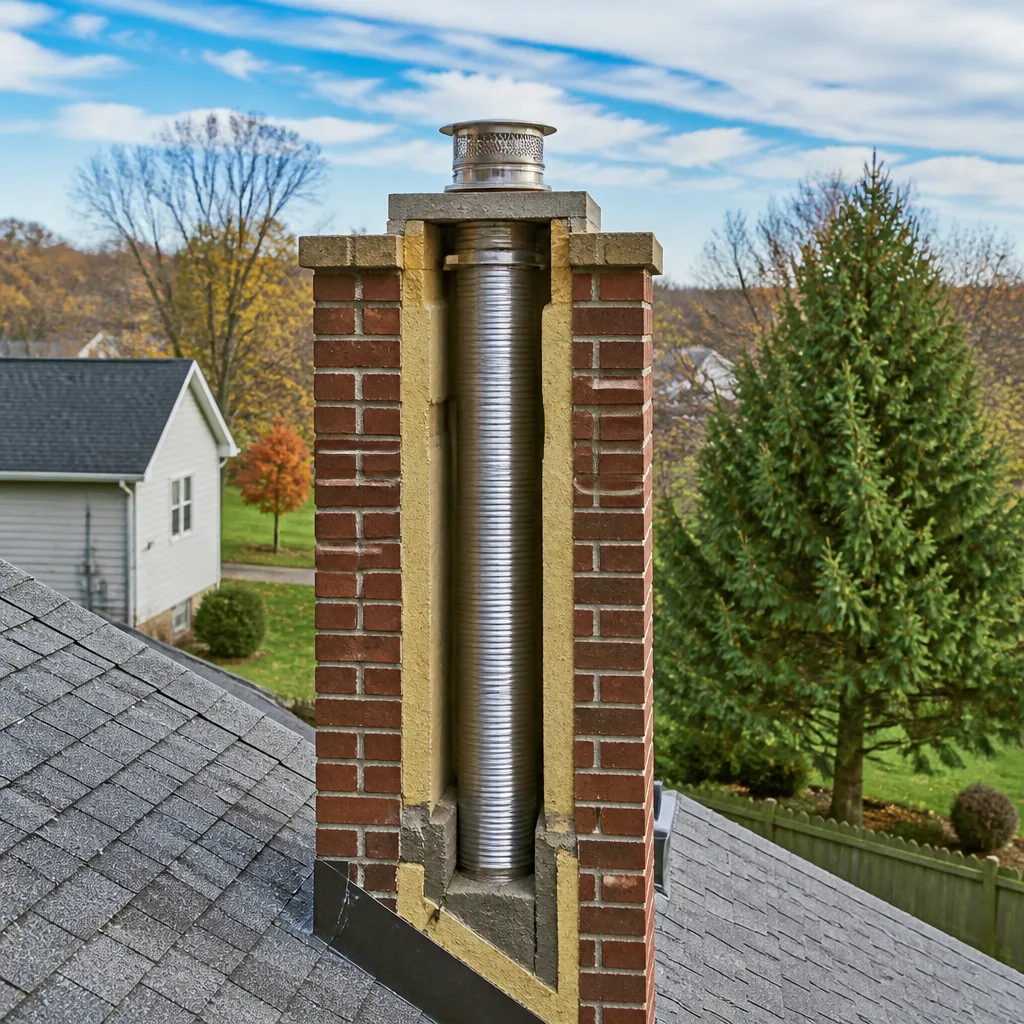
You need a new liner when the existing one is damaged, improperly sized, or absent - not because of age alone. We determine this with camera inspection, not guesswork. In Taunton’s older homes, particularly those converted from oil to gas or from coal to wood, we often find unlined chimneys or clay tile liners cracked by thermal shock. If the camera shows intact tiles, proper dimensions, and no gaps, we tell you so plainly. If it shows damage, we explain exactly what we found and show you the photos. Nothing is recommended without evidence you can see for yourself.
The National Fire Protection Association recommends annual inspection for all chimney systems, with sweeping frequency determined by use and fuel type. For wood-burning systems in regular Taunton use (more than once weekly during season), annual sweeping is standard. For occasional use, inspection annually and sweeping every two to three years may suffice. Gas systems need annual inspection but typically less frequent sweeping. The specific schedule for your system depends on what the camera shows - we don’t guess.
Three outcomes become increasingly likely: chimney fire from ignited creosote buildup, carbon monoxide intrusion from cracked flue tiles or liner failure, and structural damage from moisture penetration that compounds until rebuild is required. In Taunton’s climate, skipping two years typically moves a system from “maintenance” to “repair” category. Skipping five often means “rebuild.” The $89 tune-up you skip becomes the $3,000 repair you can’t avoid.
You can, but you shouldn’t. Creosote buildup is not visible from the firebox, and flue damage doesn’t announce itself until exhaust is entering your living space. If you must burn before inspection, use only seasoned hardwood, keep fires small and hot rather than large and smoldering, and never burn overnight. Then schedule inspection as soon as possible. The risk is real: chimney fires peak in January and February, almost always in systems that were not inspected before the burning season.
Summer chimney odor in Taunton usually indicates one of three conditions: creosote reacting with humidity (sour, acrid smell), animal presence (musty or ammonia odor), or water intrusion (earthy, mold-like smell). The specific character helps identify the cause. Humidity-driven creosote odor is most common and means the flue needs cleaning before fall. Animal odor requires immediate inspection - summer heat accelerates decomposition if an animal has died in the flue. Water odor indicates cap, crown, or flashing failure that’s admitting moisture. All three warrant professional assessment.
The Bottom Line
Taunton’s climate delivers predictable damage on a predictable schedule. The homeowners who spend least and worry least are those who match their maintenance to that schedule: spring for freeze-thaw assessment, summer for cap and flashing protection, fall for inspection and sweeping before the first fire, winter for monitoring and mid-season check if signals change. Each season’s small action prevents the next season’s large repair. Done right - and we stand behind it.
Written by Russell Haines, Owner at Hearthstone Chimney Co., serving Taunton since 2014.