
Last updated September 10, 2026
Level 1 sweep and inspection to the NFPA 211 annual standard - flue, crown, cap, and flashing checked and photographed
Chimney sweep logs do not sweep chimneys. They loosen some creosote - which then falls where a brush and vacuum still have to collect it.
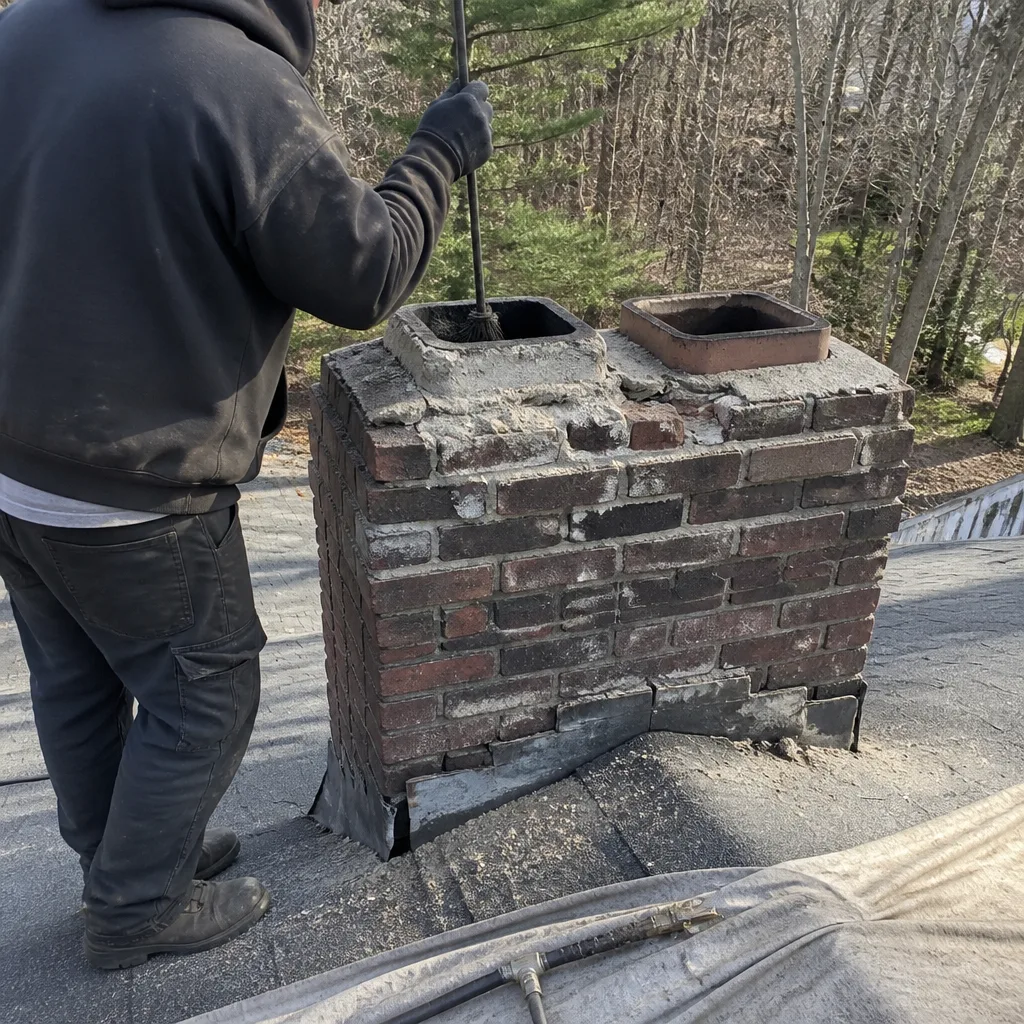 Before
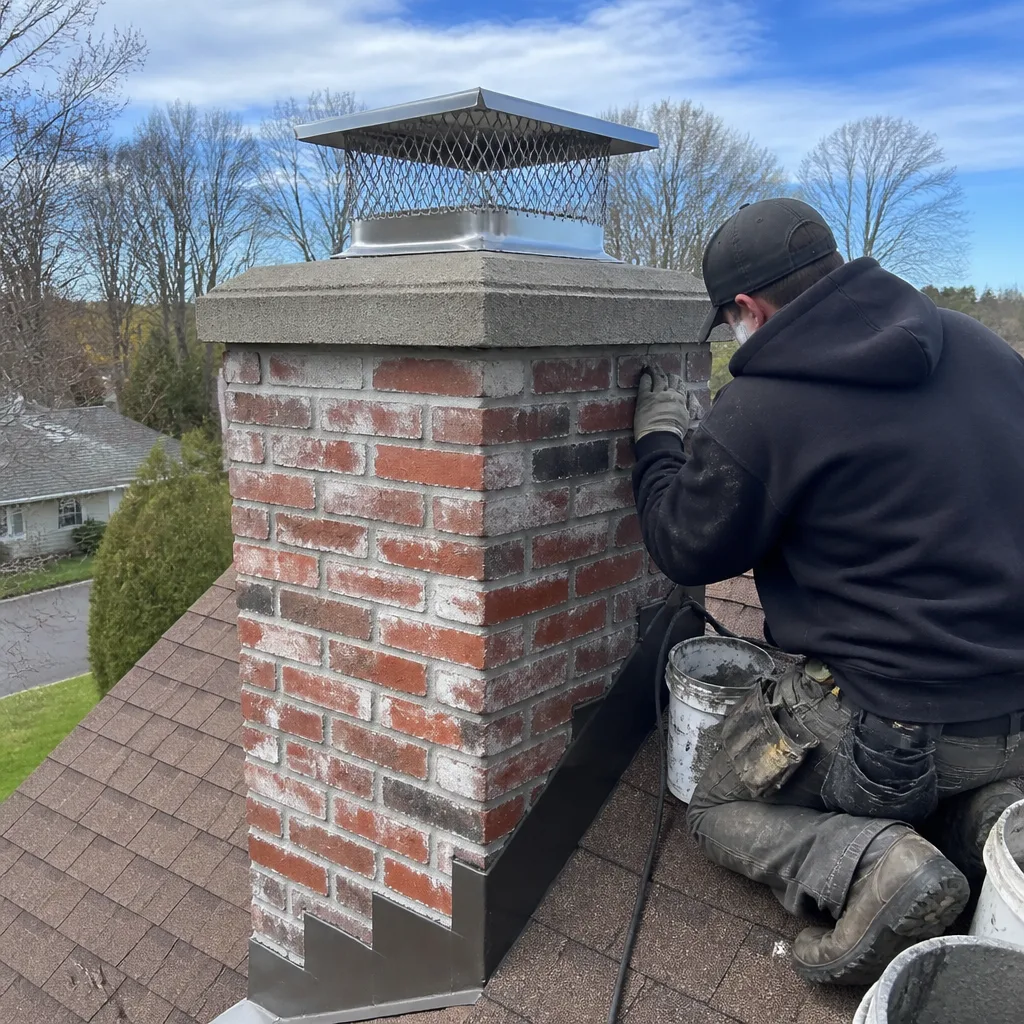 After
After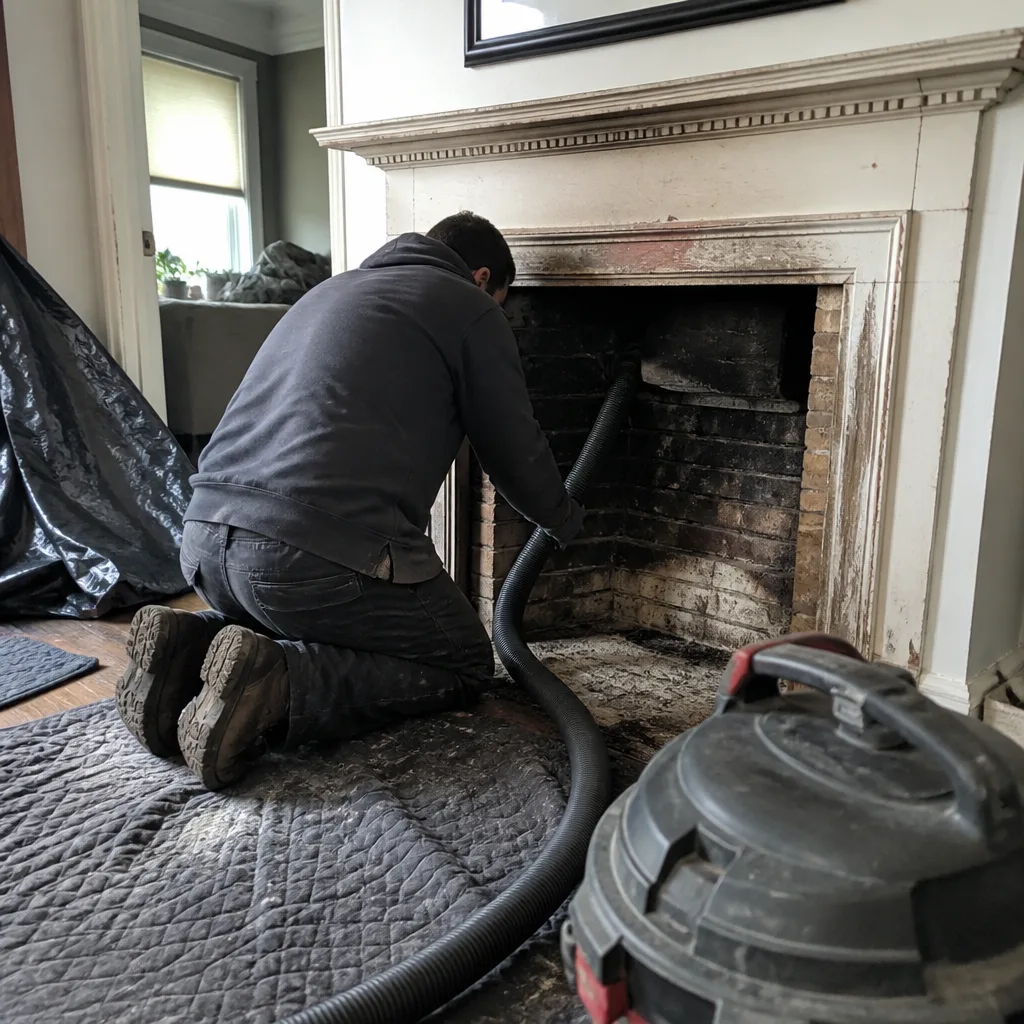 Before
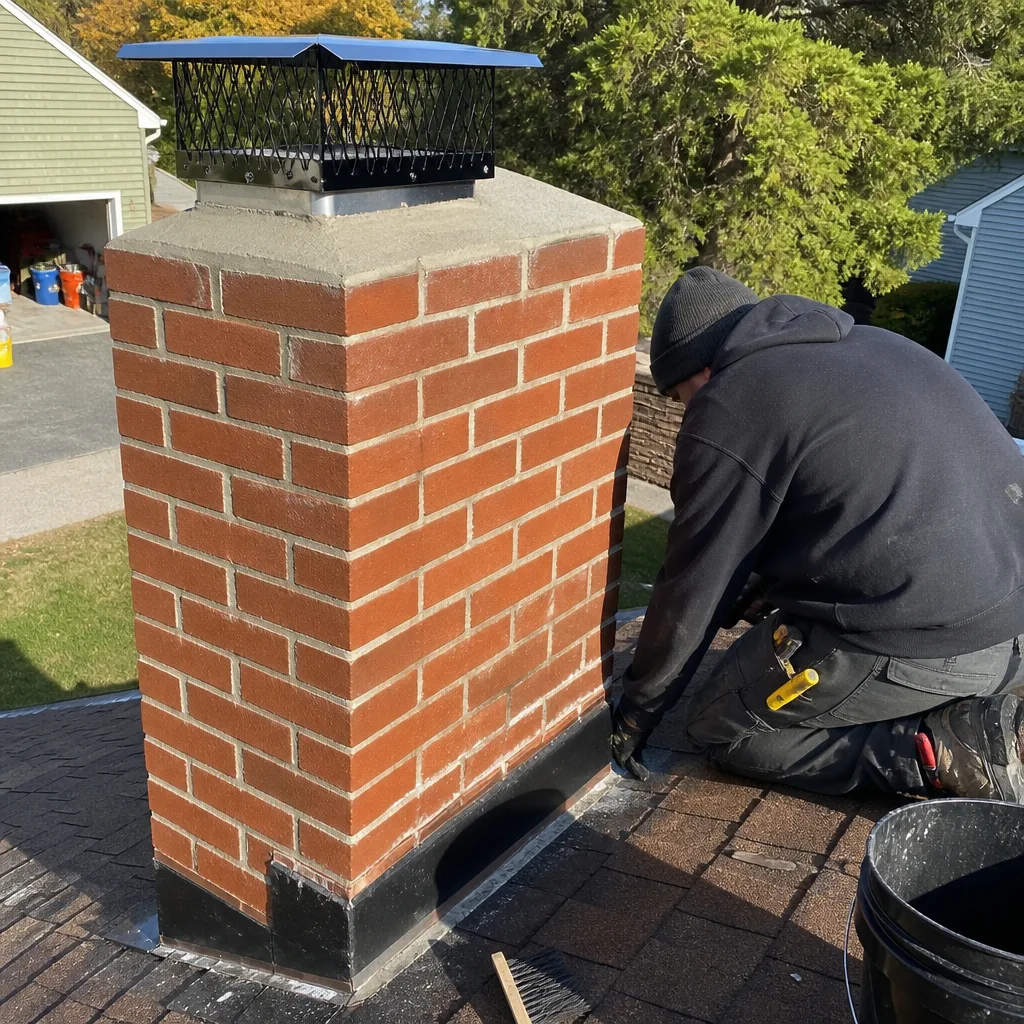 After
After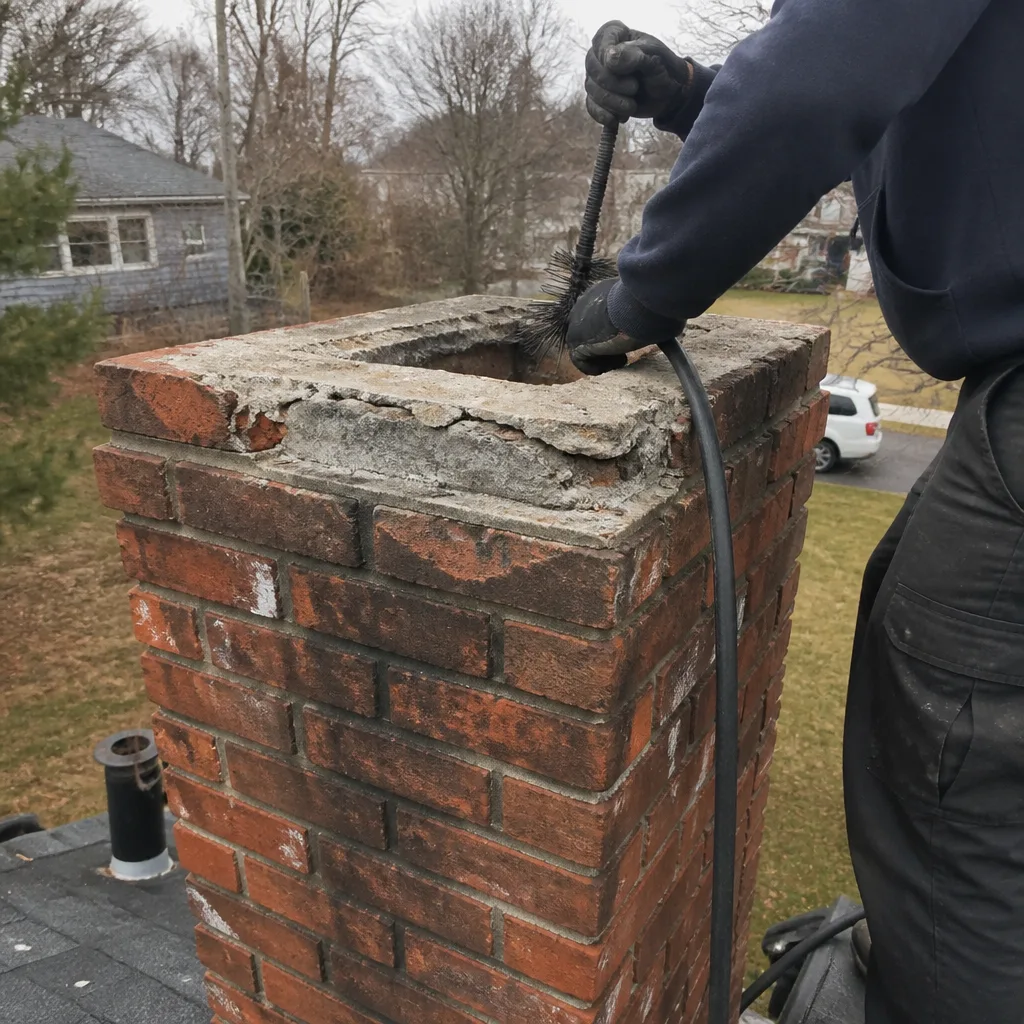 Before
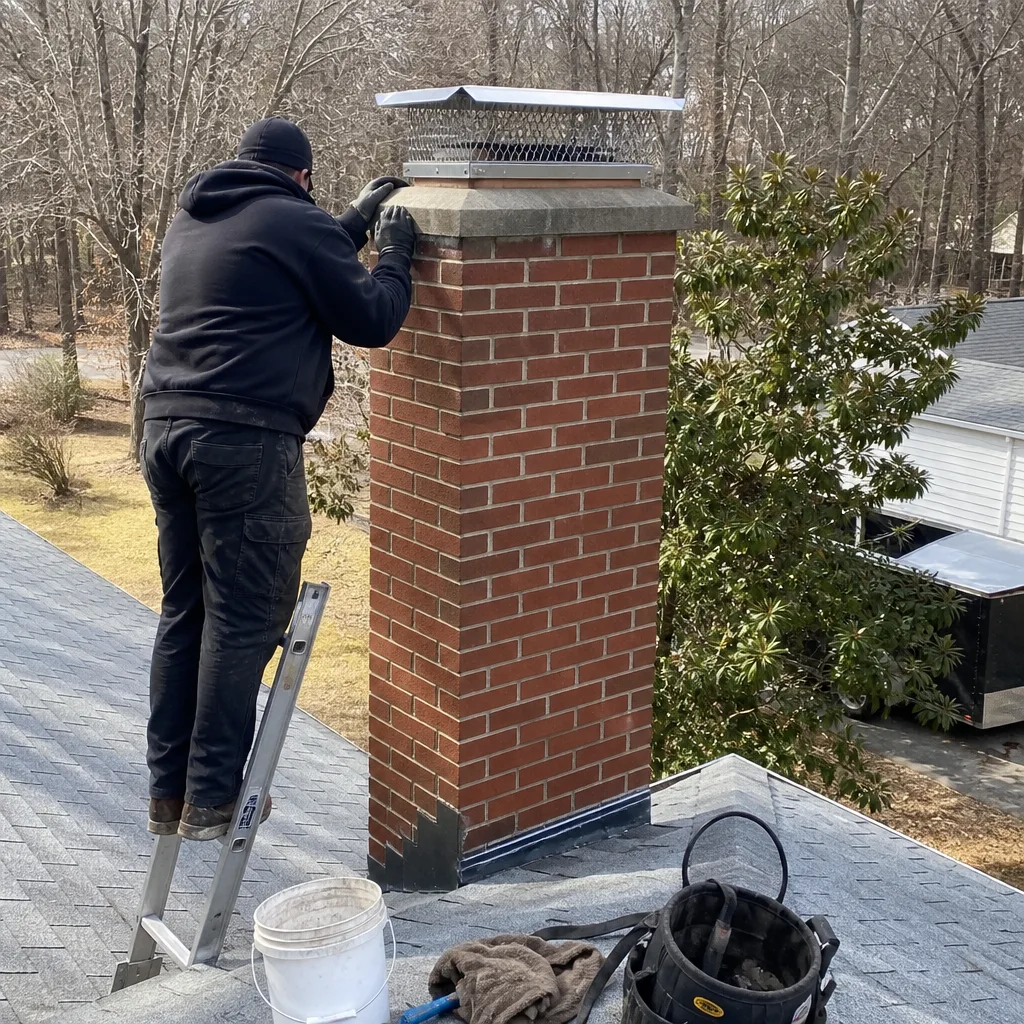 After
AfterChimney Cleaning Warning Signs: A Taunton Homeowner’s Reference Guide
A white stain on your chimney brick looks like a cosmetic issue. It is not. That stain, called efflorescence, is salt left behind after water has already moved through your masonry, dissolved minerals, and evaporated at the surface. The stain is the exit point. The entry point is somewhere above it, and by the time you can see it from the ground, water has been at work for seasons. In Taunton, where freeze-thaw cycles run from late October through April, that water is expanding, contracting, and quietly destroying mortar joints while you burn fires below.
This guide, along with our Complete Guide to Chimney Cleaning in Taunton, translates what you can see, smell, and feel into what is actually happening inside your chimney. No jargon, no scare tactics. Just the diagnostic framework we’ve refined over 42 years of sweeping chimneys in Bristol County.
Quick Answer
The most critical chimney warning signs are: white or dark staining on exterior brick (water intrusion), campfire or musty odors when the fireplace is not in use (creosote buildup or moisture), smoke rolling into the room during operation (draft failure or blockage), and rust on the damper or firebox (chronic moisture or liner failure). These symptoms fall into three action categories: schedule soon, schedule before next use, or do not use this fireplace until inspected.
Table of Contents
- Exterior Warning Signs: Reading Your Chimney from the Curb
- Interior Odors: What Your Nose Can Tell You
- Draft Problems: When Smoke Goes the Wrong Direction
- Firebox and Damper Red Flags
- Roofline Inspection: What You Can Check Without a Ladder
- The Triage Framework: Schedule Soon, Before Next Use, or Do Not Use
- Common Mistakes to Avoid
- When to Call a Professional
- Frequently Asked Questions
Exterior Warning Signs: Reading Your Chimney from the Curb
Taunton’s housing stock spans three centuries, from 18th-century Colonials near Taunton Green to post-war capes in East Taunton and 1980s splits in North Taunton. Every era used different brick, different mortar, and different crown construction. But the warning signs read the same once you know the language.
White staining (efflorescence). That chalky white film means water has penetrated the masonry, dissolved soluble salts, and carried them to the surface. In Taunton, we see this most often on north-facing chimney faces where sun exposure is weakest and freeze-thaw cycles are most aggressive. The salt itself is harmless. The water movement behind it is not. Left alone, it progresses to spalling, where the face of the brick literally peels away in layers. We’ve replaced entire chimney shoulders in Weir Village where efflorescence was ignored for five years.
Dark staining or green-black patches. These indicate organic growth, moss, or algae, which require persistent moisture to survive. Unlike efflorescence, which can appear after a single wet season, dark staining means water has been present continuously enough to support life. The mortar is saturated, and the freeze-thaw damage accelerates exponentially. In our experience, dark-stained chimneys in Taunton are three times more likely to need crown rebuilding within two years.
Spalling brick. The brick face flakes off like old paint, exposing the softer interior. This happens when water enters, freezes, and expands with enough force to break the brick’s surface tension. Taunton’s clay-heavy soil and above-average rainfall contribute, but the real driver is almost always a failed crown or deteriorated mortar cap that lets water pool on top and wick downward. Spalling cannot be reversed. The brick must be replaced, and the water source eliminated.
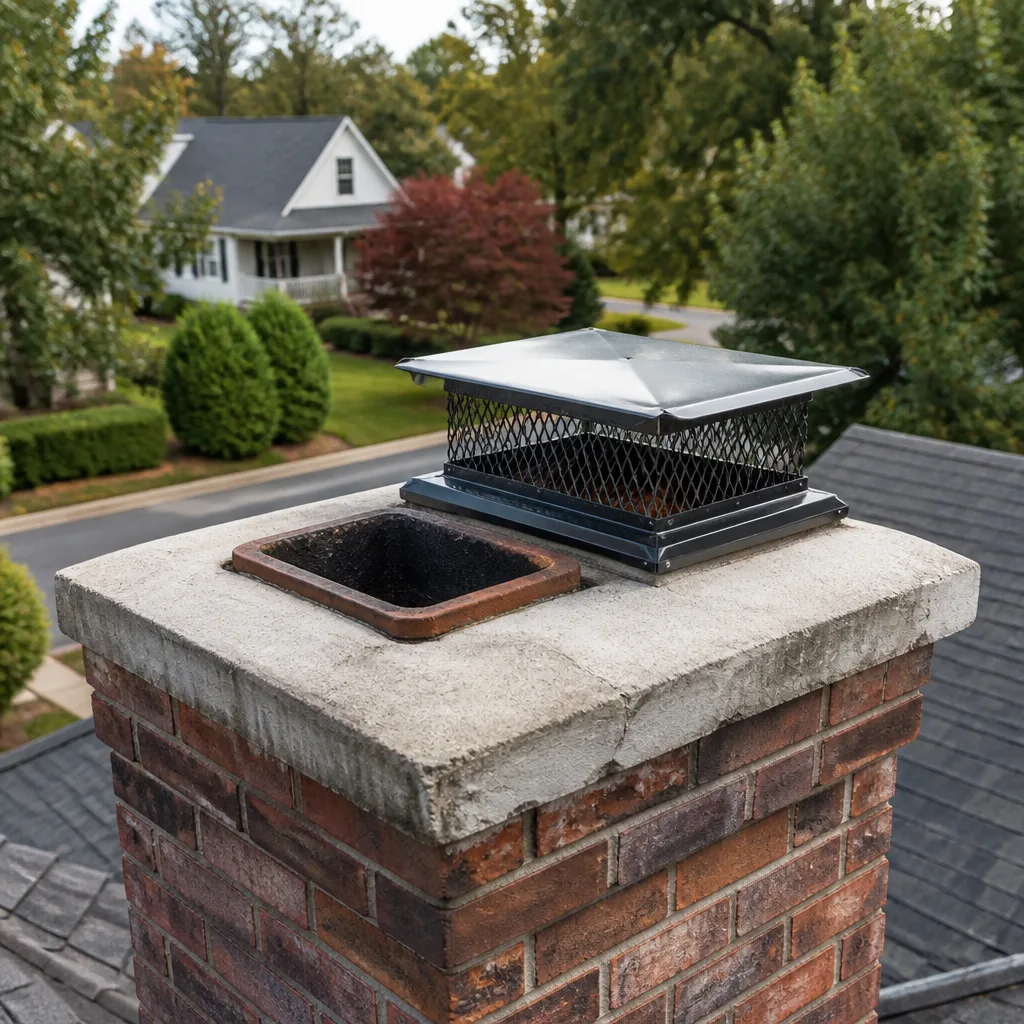
Cracked or missing crown. The crown is the concrete slab that tops your chimney, sloped to shed water. A proper crown overhangs the brick by at least two inches and has a drip edge underneath. When it cracks, water goes straight into the chimney’s core, saturating the flue liner and often rusting the damper from above. We’ve opened dampers in Taunton homes where the metal was perforated like Swiss cheese from crown leaks that went unnoticed for a decade.
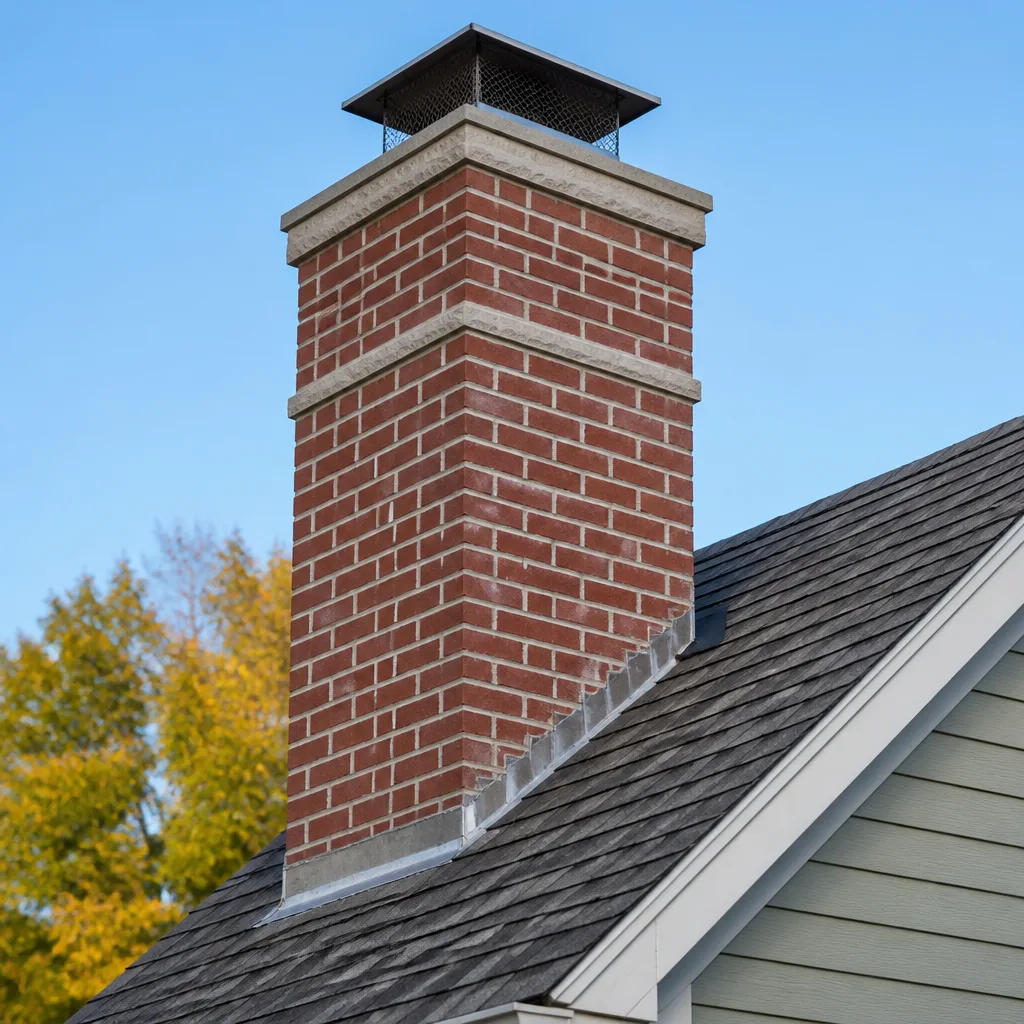
Missing or damaged flashing. The metal where your chimney meets the roofline is the most common leak point we find. Step flashing should weave into the shingles; counterflashing should be cut into the mortar joints. When either fails, water runs down the chimney’s exterior, stains bedroom ceilings, and rots roof sheathing. In Taunton’s older neighborhoods, we’ve seen original lead flashing from the 1960s still doing its job, and replacement aluminum from ten years ago already corroded through.
Interior Odors: What Your Nose Can Tell You
Your fireplace should not announce itself in July. When it does, your nose is detecting a problem that eyes cannot see.
Musty, damp smell. This is water in the system. Could be a crown leak saturating the flue, could be condensation from an oversized liner in an unlined chimney, could be a blocked drainage path in the ash pit. In Taunton’s humid summers, a musty fireplace often means the chimney is acting as a vent for basement moisture as well as flue gases. We bring a moisture meter on every inspection. Readings above 17% in firebox brick indicate active water intrusion requiring source identification before any cleaning.
Campfire smell in warm weather. This is creosote, and it means your last cleaning was incomplete or your burning habits deposit heavy, sticky residue. Creosote is hygroscopic, it absorbs moisture from humid air, and when it does, it releases that sharp, smoky odor. In Taunton, we get calls about this every July when humidity spikes. The smell is annoying. The underlying creosote is hazardous. Stage 3 glazed creosote can ignite at 451 degrees, and a chimney fire can reach 2,000 degrees in seconds.
Sharp, acrid smell during operation. This is different from normal wood smoke. It suggests incomplete combustion, which can mean: green or unseasoned wood, a flue that is too cold to establish proper draft, or a partial blockage restricting oxygen flow. The smell is your warning that carbon monoxide may be present in higher-than-safe concentrations. Any acrid odor during burning warrants immediate shutdown and inspection.
Animal or decomposition smell. Squirrels, raccoons, and chimney swifts find uncapped flues irresistible. A trapped animal smells unmistakable and arrives suddenly. A nest smells more subtle, like musty straw, and persists. In Taunton, we remove fifteen to twenty animal obstructions each spring. The real risk is not the smell. It is the nest material itself, which can ignite and cause a flue fire, or block the flue and force carbon monoxide back into the house.
Draft Problems: When Smoke Goes the Wrong Direction
Draft is the pressure difference that pulls combustion gases up and out. When it fails, smoke enters your living space. The cause is not always blockage. Often it is physics.
Smoke rolling into the room during startup. Cold air is heavier than warm air. In a chimney that has not been used for days, especially one on an exterior wall in a Taunton January, the flue can be filled with dense, cold air that acts as a plug. Warm smoke from your kindling cannot push through. The solution is priming the flue: roll a newspaper, light the end, and hold it up the damper opening until you feel the draft reverse. If smoke still enters after priming, you have a structural or blockage issue, not a cold flue.
Cold backdraft when fireplace is not in use. You feel a draft of cold air coming down the chimney. This often happens in tightly sealed modern homes where interior negative pressure overwhelms the chimney’s natural draft. But in Taunton’s older, leakier housing stock, persistent cold backdraft usually means the chimney is too short, too exposed, or partially blocked. A chimney must clear the peak of the roof by at least two feet and be at least ten feet tall overall to generate reliable draft. We’ve seen additions and dormers built around chimneys that left them three feet below code minimum, rendering them unable to draft properly in any wind condition.
Smoke on windy days only. This points to downdraft from surrounding trees, buildings, or roof geometry. The chimney terminates in a turbulent zone. Solutions range from extending the chimney height to installing a specialized cap. We specify chimney cap and crown work in Taunton using caps engineered for wind resistance, not the big-box store varieties that can actually worsen turbulence.
Smoke that worsens as the fire builds. This is the signature of a flue that is too small for the fireplace opening. The ratio matters. A fireplace opening more than ten times the flue cross-sectional area will spill smoke at high burn rates. In Taunton’s 1970s and 1980s construction, we frequently find builder-spec fireplaces with 36-inch openings connected to 8×8 flue tiles. The math does not work. The fix is a smoke guard to reduce the opening, or a flue extension, not more sweeping.
Firebox and Damper Red Flags
The firebox is where you see the fire. It is also where the most dangerous failures first become visible.
Cracked firebrick or refractory panels. Small hairline cracks are normal thermal stress. Gaps wider than a nickel, or cracks that run corner-to-corner, mean the panel has lost structural integrity. During a chimney fire, a compromised firebox can allow flames to reach the wood framing directly. We replace firebrick with matching refractory material rated to 2,200 degrees, not standard brick that will spall under heat shock.
Rusted damper. The damper should operate smoothly and seat cleanly when closed. Rust means water has been entering from above, and it means the damper will eventually seize or fail to seal. A damper that cannot close costs you heating dollars all winter and admits cold air all summer. In severe cases, we install top-sealing dampers from Gelco or Olympia Chimney that seal at the flue top, eliminating the rust path entirely and improving energy efficiency.
Stained or degraded hearth. The hearth extension must project at least 16 inches in front of the opening and 8 inches to each side. Staining that extends beyond these dimensions suggests rolling smoke, which means draft failure or an opening-to-flue mismatch. We document hearth staining with photos and measure the opening-to-flue ratio on every chimney cleaning and sweep in Taunton.
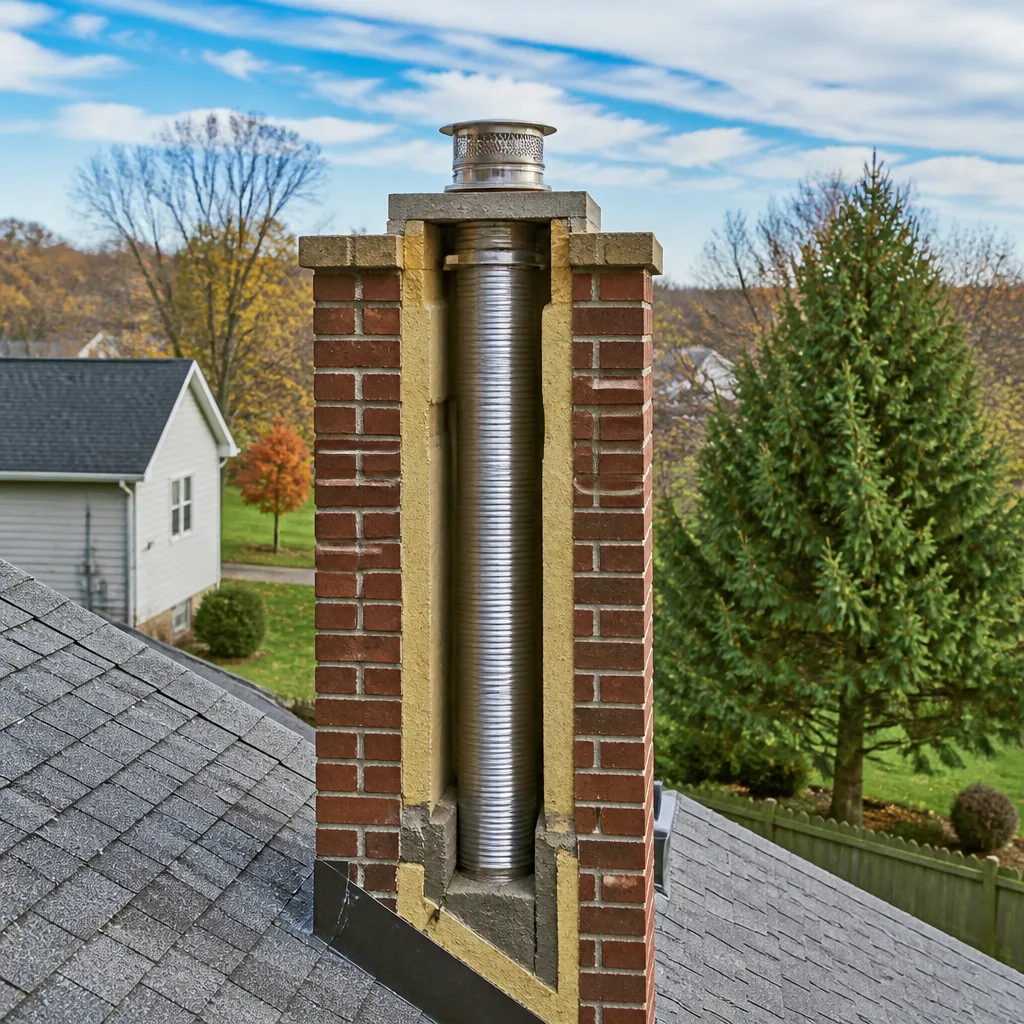
Missing or damaged liner. If you can see bare brick or clay tile joints inside the flue, your liner is compromised. A liner contains combustion gases, protects the masonry from corrosive byproducts, and sizes the flue correctly for the appliance. Unlined or damaged liners are the single most common factor in chimney fires and carbon monoxide intrusion. We install stainless steel liners from DuraFlex and HeatShield, and we document the before condition with camera inspection so you see exactly what we found.
Roofline Inspection: What You Can Check Without a Ladder
Most chimney damage begins at the top and works down. You do not need to climb to see the critical signs. You need binoculars or a camera on an extension pole, and you need to know what to document.
Step 1: Position and equipment. Stand at the curb or across the street where you have a clear sightline to the chimney top. Use binoculars with at least 8x magnification, or mount your phone on a painter’s pole with a clamp adapter. In Taunton, where many streets are narrow and trees are mature, you may need to walk to the next property line for an unobstructed view. Take photos on a clear day, within two hours of noon, when shadows are minimal.
Step 2: Crown condition. Look for cracks wider than a pencil line, missing chunks, or a flat or bowl-shaped top that will hold water. A proper crown slopes away from the flue at a minimum 3:12 pitch. If you see standing water stains or green growth on the crown surface, water is pooling and penetrating.
Step 3: Flue termination. The flue tile or metal liner should project at least two inches above the crown, with visible mortar wash or seal between the flue and crown. If the flue is flush or below the crown surface, water runs directly into the chimney core. We call this a “swimming pool” detail, and it guarantees internal water damage.
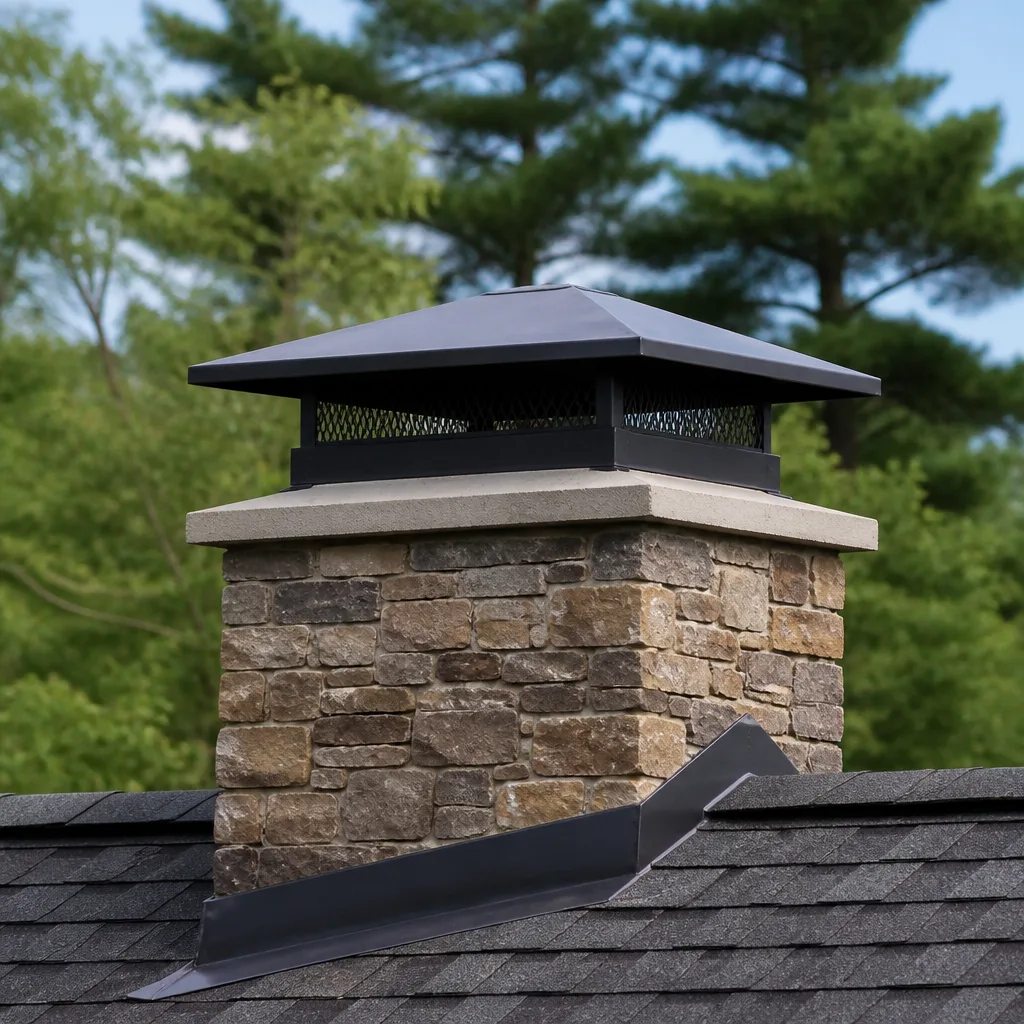
Step 4: Cap and spark arrestor. The cap should cover all flue openings with at least five-inch clearance to the flue tile. Mesh sides should be intact, not rusted through or clogged with creosote. Missing caps are invitations to animals and water. In Taunton, we recommend stainless steel or copper caps with lifetime warranties, not galvanized steel that will rust through in five to seven years.
Step 5: Brick and mortar at the roofline. Check the courses immediately above and below the flashing. This is where freeze-thaw damage concentrates, because the roof provides a heat sink that creates temperature differentials. Spalling, missing mortar, or separated flashing here indicates water management failure that will soon affect interior ceilings.
Document what you find with dated photos. If you call us with this documentation, we can often triage over the phone whether an inspection is urgent or can wait for your scheduled maintenance.
The Triage Framework: Schedule Soon, Before Next Use, or Do Not Use
After 42 years, we categorize every warning sign into one of three action levels. This is the same framework our technicians use in the field.
Schedule soon (within 30 days): Efflorescence without spalling. Musty odors that resolve when the weather dries. Minor damper rust that still operates. Single cracked firebrick with no gap. These conditions permit continued use with heightened awareness. Book a standard inspection and cleaning at your convenience.
Schedule before next use: Any smoke spillage that resolves with priming but recurs. Campfire odor in summer indicating glazed creosote. Visible liner damage or missing flue tile sections. Crown cracks that do not yet show interior leakage. Animal presence or nesting material. These conditions mean the system is compromised but not immediately hazardous. Do not light another fire until inspected.
Do not use this fireplace: Smoke that does not resolve with proper priming and dry fuel. Acrid smell during operation. Visible flame or glowing material in the flue during use (chimney fire in progress, call 911). Collapsed or separated liner. Significant spalling with exposed interior chimney structure. Water actively dripping into the firebox during rain. These conditions present immediate risk of fire, carbon monoxide exposure, or structural collapse. Shut down the appliance and call for emergency inspection.
We do not use these categories to sell work. We use them because a 42-year company plans to be here when you need us next, and that only happens if we keep you safe now. Our fireplace services in Taunton include emergency inspection priority for “do not use” conditions, with same-week scheduling guaranteed.
Common Mistakes to Avoid
- Assuming a chimney fire sounds dramatic. Most chimney fires are quiet. A low rumbling like a distant train, or sudden dense smoke, are the typical signs. Taunton homeowners who wait for flames or loud noise often miss the event entirely and discover damage later.
- Treating efflorescence with sealant. Painting or sealing the exterior traps water inside the masonry, accelerating freeze-thaw damage. The correct response is finding and fixing the water source, then allowing the wall to breathe and dry.
- Burning green or unseasoned wood. Wood with moisture content above 20% deposits heavy, acidic creosote and cools the flue below the dew point where condensation forms. In Taunton, we see this every January from homeowners who bought “seasoned” wood in October that was split green and never dried.
- Installing a chimney cap from a hardware store without measuring. Ill-fitting caps create new leak paths, block proper draft, or fail to cover all flue openings. We measure flue dimensions and specify caps from Famco or Gelco with proper clearance and mesh sizing for your appliance type.
- Ignoring a single smoky fire. One smoky fire is a data point. Two smoky fires with the same fuel and conditions is a pattern indicating draft failure, partial blockage, or flue damage. Patterns require inspection, not repeated attempts.
- Assuming new construction means no problems. We’ve found unlined flues, improperly sized liners, and missing chimney caps in Taunton homes built within the last five years. Builder inspections focus on code minimums, not optimal performance or longevity.
- Waiting for the “chimney sweep season.” By October, every reputable sweep in Bristol County is booked three to four weeks out. Warning signs identified in August that are ignored until September often become emergencies in the first cold snap. Schedule in spring or summer when we can give your chimney the full attention it needs.
When to Call a Professional
Call when you observe any “schedule before next use” or “do not use” sign from the triage framework above. Call when you smell something new and cannot identify the source. Call when your neighbor mentions their chimney needed work and yours is the same age, construction, and exposure. Call when you have lived in your Taunton home more than two years without a documented Level-2 camera inspection, or read How to Hire a Chimney Cleaning Contractor in Taunton to prepare.
A proper inspection ends with photos you can see and a plain-English verdict. No hidden camera fees. No pressure to book immediately. No recommendations without evidence you can examine yourself.
Hearthstone Chimney Co. offers free estimates in Taunton. Call (774) 310-4281. A live person answers, 24 hours a day, every day. We’ll schedule a time that works, arrive when we say, and leave you with documentation you can keep for your records.
Frequently Asked Questions
A standard chimney cleaning and Level-1 inspection in Taunton typically runs $250 to $350 for a single-flue masonry fireplace, depending on creosote buildup and accessibility. Our $89 Seasonal Tune-Up covers basic cleaning for well-maintained systems during off-peak months. Level-2 camera inspections, required for real estate transactions or after chimney fires, range $400 to $600 and include photo documentation and a written condition report. Call (774) 310-4281 for an exact quote for your system, estimates are free.
You need a new liner when the existing one is cracked, separated, or missing entirely, when it is improperly sized for your appliance, or when it has suffered heat damage from a chimney fire. We do not recommend liner replacement without camera evidence you can see yourself. In many Taunton homes with clay tile liners, a single cracked tile can be repaired with HeatShield cerfractory sealant rather than full replacement. The camera inspection tells us which path is appropriate for your specific condition.
The National Fire Protection Association recommends annual inspection for all chimney systems, and cleaning as needed based on creosote accumulation. For Taunton homeowners who burn wood as primary heat, that typically means sweeping every cord of wood burned, or annually, whichever comes first. Occasional weekend burners may go two years between cleanings if inspection shows minimal buildup. We track your burning habits and schedule reminders so you do not have to remember, and we publish more guides & resources to help you stay informed.
Skipped maintenance leads to progressive creosote buildup, which increases chimney fire risk and reduces flue diameter until draft failure occurs. Water intrusion from uncrowned or unflashed chimneys destroys mortar from the inside, eventually requiring rebuild rather than repair. In Taunton’s freeze-thaw climate, a $200 crown repair deferred becomes a $4,000 shoulder rebuild in five to seven years. The cost of prevention is always lower than the cost of restoration.
Summer smoke odor is creosote absorbing humidity from Taunton’s humid air and off-gassing. The solution is not air freshener. It is removing the creosote source through proper cleaning, then addressing any water intrusion that accelerates deposit formation. A top-sealing damper from Gelco or Olympia Chimney can also reduce humid air exchange when the fireplace is not in use.
Homeowners can and should perform the exterior visual inspection described in this guide, looking for staining, spalling, and cap condition from the ground. What you cannot do is assess flue liner condition, measure creosote thickness accurately, or evaluate draft performance with proper equipment. Our Level-2 inspections use video cameras that traverse the entire flue, documenting conditions invisible from below. The $400 to $600 inspection cost is minor compared to the risks of an undetected liner failure or creosote ignition.
The Bottom Line
Chimneys communicate clearly if you know the vocabulary. White stains mean water has already entered. Summer smoke smell means creosote is present and active. Smoke in the room means draft has failed or the flue is compromised. Each sign maps to a specific underlying condition, and each condition has a correct response that does not involve guesswork or delay.
The framework is simple: document what you see, categorize the urgency, and act before small problems become large ones. In Taunton’s climate, with its freeze-thaw cycles and mature housing stock, the cost of waiting is always higher than the cost of inspection.
We’ve been sweeping chimneys in Bristol County since 1984. We plan to be here in thirty more years. That long horizon shapes how we treat every homeowner we meet. Done right, and we stand behind it. Photos you can see, a plain-English verdict. In writing, no arguing. A square deal: no surprises on the bill.
Written by Russell Haines, Owner at Hearthstone Chimney Co., serving Taunton since 2014.